Just read two great blogs for writers:
James Scott Bell's "The Kill Zone: The Magical Midpoint Moment" (which is exactly what I need at this point in my WIP)
Kristen Lamb's "5 Traits of the Successful Author" is a good reminder of the difference between an amateur and a pro.
Tuesday, July 9, 2013


Day nine

July 9, 2013
10:41 a.m.
When Scene 1of Chapter 7 fell flat, I let the manuscript rest for a few days while the problem of why simmered in my brain. I emailed the scene to my online critique group for feedback. "Melody (my main character) is acting out of character," wrote back one. "Needs more tension and conflict" wrote back another. Bingo! They both nailed the problems. What I love about their comments is that they both showed me what they liked and hence what to keep, as well as what needed revised.
I spent yesterday rewriting the scene and am much happier with it. The muse is dancing again.
If you don't belong to an online critique group, find one or form one. Or join one in your area. You can meet weekly or monthly. I like the online group because it works with our separate schedules. No meetings, just submit every other week (I'm submitting every week while I push through my WIP), review when you have time. And my writing buddies are always there to help me through a rough patch, like Chapter 7, Scene 1. Their feedback is always balanced with what could be improved and what is working. They are an encouraging group. Thank you, Patty Kyrlach, Robyn Whitlock, Kathy Bolduc, and Kay Clark!
(Check out Word Weavers and see if there's a chapter near you. If not, why not see about starting one?)
PROGRESS REPORT: Still working on Chapter 7, Scene 1, and I see clearly what needs to be covered in Chapter 8, which will be the last chapter in Act 1. Still on target to meet my goal of 20K words in July. Aiming to finish Chapter 7 today and Chapter 8 Thursday.
TOTAL WORDS FOR JULY (as of 11:10 a.m., 7/9) : 2,414
TOTAL WORDS in MANUSCRIPT: 18,642
Friday, July 5, 2013
Day five

July 5, 2013
9:03 a.m.
No forward progress as far as words go. I took James Scott Bell's advice and took a day off. Hubby and I went to see a 5th wheel up by Lewis Run, in the Allegheny National Forest. I read portions of Bell's Plot and Structure that applied to where I am now in the novel. And I did a lot of thinking and taking notes: Why, for example, did the scene where my protagonist finally meets the man she's supposed to fall in love with fall flat? Jotted down lots of plot ideas.
Today I have my column to write, blogs to schedule, and lessons to review. What I really want to do is hole up someplace and just read.
I will complete 20K by July 31. I will.
Wednesday, July 3, 2013
Day three

8:27 a.m.
Wrote only 107 words yesterday, and that includes tweaking what I wrote the day before. The scene went stale. Has that ever happened to you? I told myself it was horrible writing. Who was I fooling? I'm not a fiction writer.
Then I remembered what James Scott Bell wrote in Plot and Structure:
"Sometimes the . . . problem is merely writer's exhaustion. A temporary loss of confidence. Maybe even the fear that what you're writing is total garbage.
This is The Wall, and it should help you to know that most novelists hit it at some point in their first drafts.
For me, it is around the thirty-thousand-word mark. I get there and suddenly think all the worst things about my novel: the idea stinks and is beyond redemption; my writing is lame, the characters uninteresting, and the plot virtually nonexistent. I can't possibly go on. Career over."
Sound familiar? This is my fourth attempt at novel writing. Prior to this manuscript I completed two novels and abandoned a historical fiction at about 10K words. That I'm up to 18,355 words, further than usual, tells me I'm making progress. But I'm definitely at The Wall.
Here I am, closing in on Act I, ready to plunge into the "muddle" of Act II, and the creative juices freeze. What to do?
First, I won't panic.
Second, I'll complete the tasks that are on my mind that need to be done - such as paying the bills on time, fulfilling my mentoring duties, preparing Sunday's sermon, and daily stuff like putting supper together, cleaning up the kitchen, and doing the laundry. If I ignore these chores, they'll muzzle the muse.
Third, I'll read a chapter of Plot and Structure or Conflict and Suspense (another James Scott Bell how-to-write book). Bell's writing on writing never fails to motivate me. Ideas and scenes just fill my mind, begging to wriggle out.
Fourth, I'll press through. So what if it stinks? I can fix it later.
(Check out James Scott Bell talking about "Writing Through Frustration" on YouTube. Be prepared to laugh.)
Bell gives some excellent advice on pushing through The Wall in Plot and Structure:
- Take a whole day off from writing.
- Try to spend some time at a peaceful location.
- Spend at least thirty minutes sitting without doing anything. Don't read, and don't listen to music. Breathe deeply. Hear the world around you.
- Do something for pure fun.
- In the evening, drink a glass of warm milk and fall asleep reading one of your favorite authors.
- First thing the next day, write at least three hundred words on your novel, no matter what. Don't edit, don't slow down. Just write. You'll start to feel excited again.
- Push on until you complete your first draft.
I'm still on target to meet my goal of 20K words this month. I gave myself some breathing room. I can take a couple of days off a week, or write less on a couple of days. 20K/month is 5K/week, or 1K/day, 5 days a week.
I'm going to go read a chapter in Plot and Structure. Then, look out, Wall! Here I come!
Tuesday, July 2, 2013
Great new blog for writers
A friend in the publishing industry recommended Kristen Lamb's blog to me. I visited, got a good feed, and signed up. Today's post, "Brave New Publishing & Attack of the Feral Bunnies," is a great reminder to keep pressing on, pursue that dream. There are no shortcuts. Reminds me of the saying, "The only place success comes before work is in the dictionary." (Vince Lombardi)
Click here to get to Kristen's blog.
NOTE: I've added Kristen's blog to the list of blogs of interest to writers in the right margin. It will update automatically.
Click here to get to Kristen's blog.
NOTE: I've added Kristen's blog to the list of blogs of interest to writers in the right margin. It will update automatically.
Day two
9:02 a.m.
Wrote 1,020 words yesterday. Met my goal. 18,980 to go. I can't think of the mountain. I have to focus on the next step.
Monday, July 1, 2013
How to SHOW, DON'T TELL
We writers are always told to "SHOW, DON'T TELL." Anne Greene's blog for today, "Breathe Life into your Manuscript," SHOWS how this is done.
Here's an excerpt:
No. Emotion by emotion, each has to be shown,
not told.
Click here to read the entire blog.
Great advice. Thanks, Anne!
Here's an excerpt:
I discovered that in Very Deep POV,
no thought or action is told. Everything is shown. So I
couldn’t use words like wished, hoped, thought, felt, caused, watched, knew,
wondered, realized, speculated, decided.
I couldn’t use wonderful verb
phrases like happiness flashed through her, despair tugged at her, jealousy
flattened her, love took her breath away.
I couldn’t write that she smiled with
satisfaction, her skin prickled with fear, the explosion made her
jump, the pollution caused her nose to itch, her heart beat fast with
excitement.
Click here to read the entire blog.
Great advice. Thanks, Anne!
Day one

July 1, 2013
10:38 a.m.
Day one of Camp NaNoWriMo. My word count goal for the month is 20,000 words, 1,000 words a day, 5 days a week.
I'm working on Getaway Mountain, a novel about a reclusive romance novelist who overcomes betrayal to find the love she writes about.
Yesterday, I finished chapter 6, for a total of 17,121 words. Today I will write 1,000 words (at least) in chapter 7.
Friday, June 28, 2013
Trimming the verbiage in your fiction
If you, like me, are struggling with writing "tight yet precise," here are two excellent blog posts by Brandilyn Collins:
"How to Compress your Fiction, Part 1"
"How to Compress Your Fiction, Part 2"
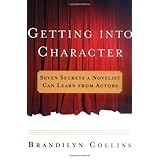
Both are adapted from her how-to book, Getting Into Character. She will be teaching at the 2014 Writing for the Soul Conference Feb, 13-16, 2014, at The Broadmoor Hotel in Colorado Springs.
Brandilyn Collins is a best-selling novelist known for her trademark Seatbelt Suspense. Awards for her novels include the ACFW Carol (three times), Inspirational Readers’ Choice, and Romantic Times Reviewers’ Choice. Brandilyn is also known for her book on fiction techniques, Getting Into Character: Seven Secrets a Novelist Can Learn From Actors (John Wiley & Sons). Read the first chapters of all her books at www.brandilyncollins.com.
"How to Compress your Fiction, Part 1"
"How to Compress Your Fiction, Part 2"
Both are adapted from her how-to book, Getting Into Character. She will be teaching at the 2014 Writing for the Soul Conference Feb, 13-16, 2014, at The Broadmoor Hotel in Colorado Springs.
Brandilyn Collins is a best-selling novelist known for her trademark Seatbelt Suspense. Awards for her novels include the ACFW Carol (three times), Inspirational Readers’ Choice, and Romantic Times Reviewers’ Choice. Brandilyn is also known for her book on fiction techniques, Getting Into Character: Seven Secrets a Novelist Can Learn From Actors (John Wiley & Sons). Read the first chapters of all her books at www.brandilyncollins.com.
Monday, June 24, 2013
Once Upon a Time
Once upon a time, I wanted to be a writer. Once upon a time I walked to the library across town and checked out four Nancy Drew mysteries and read them in one day. Once upon a time I took every writing course my college had to offer. Once upon a time I fell in love with teaching and put my writing dreams on the back burner.
For twenty years.
Then in 1993 I was teaching seventh grade reading as a full-time sub while the regular teacher was on sabbatical leave. One day the junior high librarian knocked at my door and asked me if I wanted a stack of newspapers. I'd have enough copies of the daily local newspaper for the entire class for at least a week. I'd wanted to teach a unit on reading the newspaper. I pored through sixteen filing cabinet drawers, but couldn't find any teaching material. I checked the curriculum catalogs to no avail.
So I decided to write one myself. Teaching the Newspaper, written on a Brother word processor, was my first venture into self-publishing. A local newspaper bought it to use with their Newspaper in Education program. Homeschooling parents found it easy to use and practical.
On the heels of writing the newspaper curriculum came a flood of story ideas, which I'd scribble on scraps of paper and stuff into a file folder. Then I read about the Guideposts Writers Workshop Contest. I didn't make the cut, but the story I entered was published in the September 1995 issue as "Wisdom from an Old Refrigerator."
When I told my Aunt Betty, my godmother who knew me better than I knew myself and understood me better than my own mother, that I was getting back into writing, she said, "It's about time."
And so the journey began. Or should I say, re-began.
 I'm a writer.
Writers write.
Writers read.
Writers learn the craft and hone their skills.
My summer reading stack (if you can call e-books on your Kindle or in your cloud a stack) includes Debbie Macomber's Once Upon a Time.
Everyone has a story. Even me. Even you. And we can write it--for inspiration, for material for our own fiction, for posterity.
Here's an excerpt from her webpage that describes the book:
"With chapters that cover the importance of characters, setting, backstory, and conflict, Macomber uses the elements of a story to show how to understand our own lives better. Each chapter has a storytelling prompt—a searching question that will help frame your story—and a sidebar that pulls an idea out of the chapter and expands it with practical tips. Once Upon a Time shares Debbie’s love of story and helps showcase the big picture of the story God is writing through us."
I'm loving the storytelling prompts. The prompt for chapter one:
For twenty years.
Then in 1993 I was teaching seventh grade reading as a full-time sub while the regular teacher was on sabbatical leave. One day the junior high librarian knocked at my door and asked me if I wanted a stack of newspapers. I'd have enough copies of the daily local newspaper for the entire class for at least a week. I'd wanted to teach a unit on reading the newspaper. I pored through sixteen filing cabinet drawers, but couldn't find any teaching material. I checked the curriculum catalogs to no avail.
So I decided to write one myself. Teaching the Newspaper, written on a Brother word processor, was my first venture into self-publishing. A local newspaper bought it to use with their Newspaper in Education program. Homeschooling parents found it easy to use and practical.
On the heels of writing the newspaper curriculum came a flood of story ideas, which I'd scribble on scraps of paper and stuff into a file folder. Then I read about the Guideposts Writers Workshop Contest. I didn't make the cut, but the story I entered was published in the September 1995 issue as "Wisdom from an Old Refrigerator."
When I told my Aunt Betty, my godmother who knew me better than I knew myself and understood me better than my own mother, that I was getting back into writing, she said, "It's about time."
And so the journey began. Or should I say, re-began.
I'm a writer.Writers write.
Writers read.
Writers learn the craft and hone their skills.
My summer reading stack (if you can call e-books on your Kindle or in your cloud a stack) includes Debbie Macomber's Once Upon a Time.
Everyone has a story. Even me. Even you. And we can write it--for inspiration, for material for our own fiction, for posterity.
Here's an excerpt from her webpage that describes the book:
"With chapters that cover the importance of characters, setting, backstory, and conflict, Macomber uses the elements of a story to show how to understand our own lives better. Each chapter has a storytelling prompt—a searching question that will help frame your story—and a sidebar that pulls an idea out of the chapter and expands it with practical tips. Once Upon a Time shares Debbie’s love of story and helps showcase the big picture of the story God is writing through us."
I'm loving the storytelling prompts. The prompt for chapter one:
What is your “in the beginning story” as told to you by family? What is
your own earliest memory?
I opened a file on my desktop,labeled it OUAT journal prompts, opened a new WORD document, and began writing about my maternal grandmother, who immigrated from Europe in 1910.
Writing is rarely easy. Even when writing my own story. But I find the more I write, the better the words flow, and the easier it becomes. NOTE: It doesn't become easy, but easier.
If you're looking for a good read and a practical book on the craft of writing, one with do-able exercises, get Debbie's book, Once Upon a Time. It's available in hard copy and as an ebook.
Now, on to write the chapter two prompt . . .
Subscribe to:
Posts (Atom)